THE DISH
A trumpet and a stethoscope
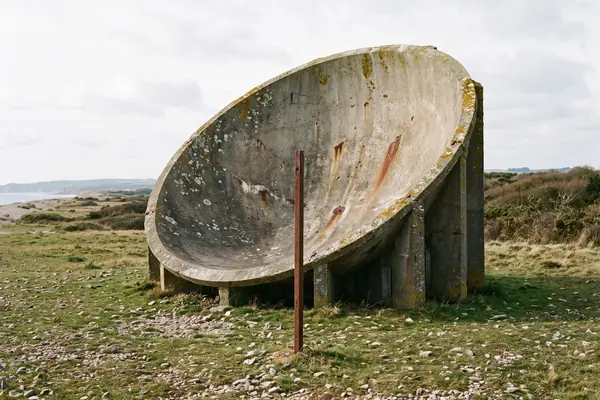
On the 20 ft and 30 ft mirrors, engine sound bounced off the concrete into a metal trumpet linked to a stethoscope. Moving the trumpet to the loudest spot gave the direction.
Compare the mirrors soundboardhero
00BEFORE RADAR
In the 1920s, Britain listened for aircraft.
Curved concrete dishes and walls gathered the drone of distant engines and focused it onto a listener or a row of microphones. Three of them still stand at Denge in Kent, now on an island in a flooded gravel pit.
Compare the mirrors01Principles
02THE SHORT ANSWER
A concave surface reflects sound to a focus.
Find the best focus and you have a direction.
THE DISH
On the 20 ft and 30 ft mirrors, engine sound bounced off the concrete into a metal trumpet linked to a stethoscope. Moving the trumpet to the loudest spot gave the direction.
Compare the mirrorsTHE WALL
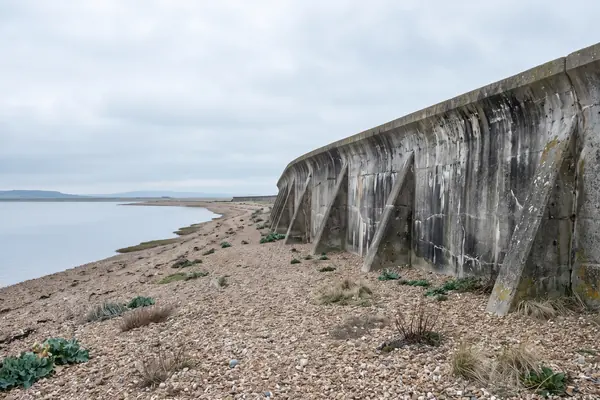
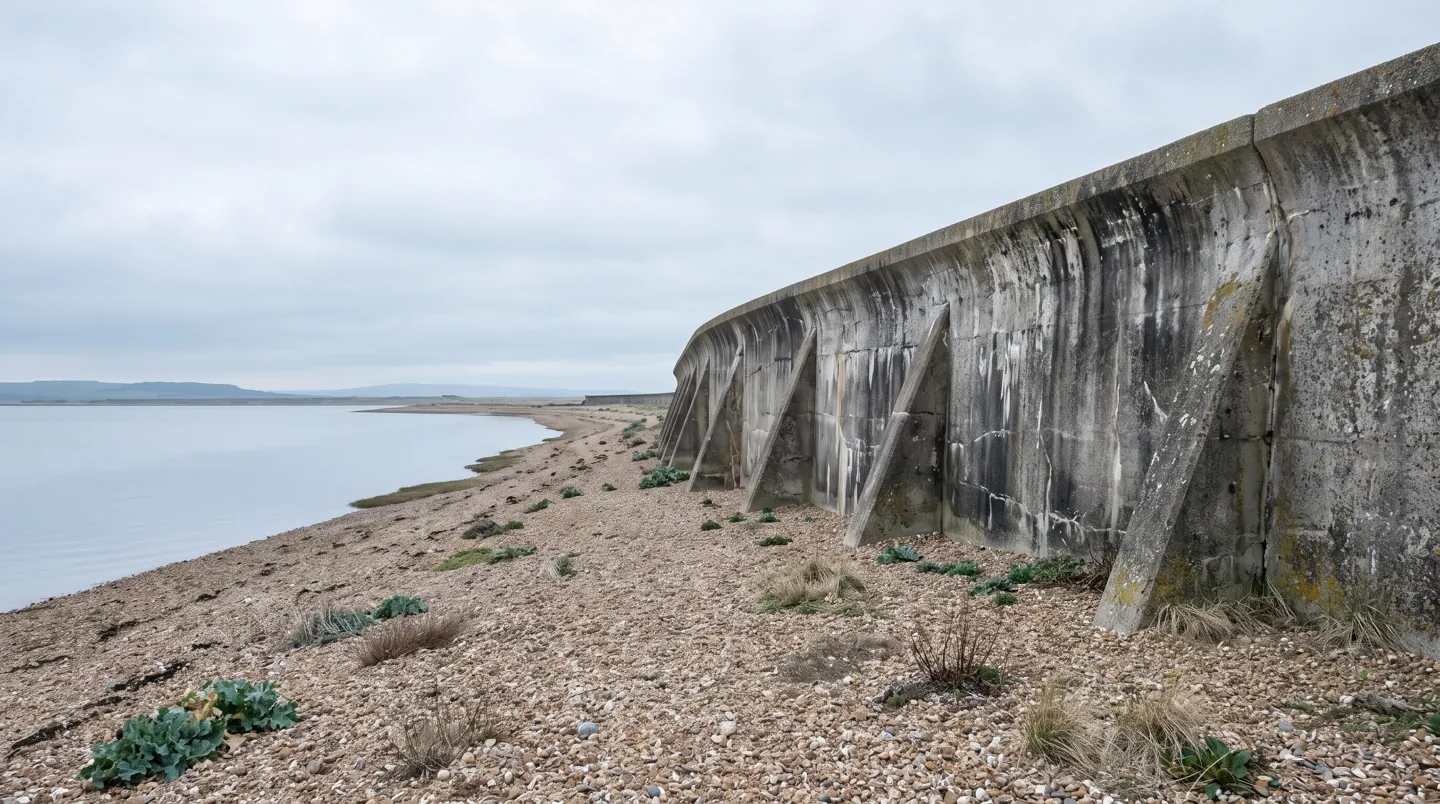
The 200 ft strip mirror at Denge used microphones along its front. Whichever microphone heard best showed the angle to the aircraft.
See the numbersTODAY
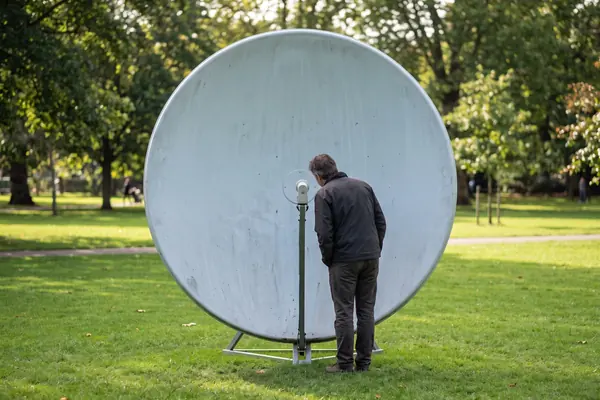
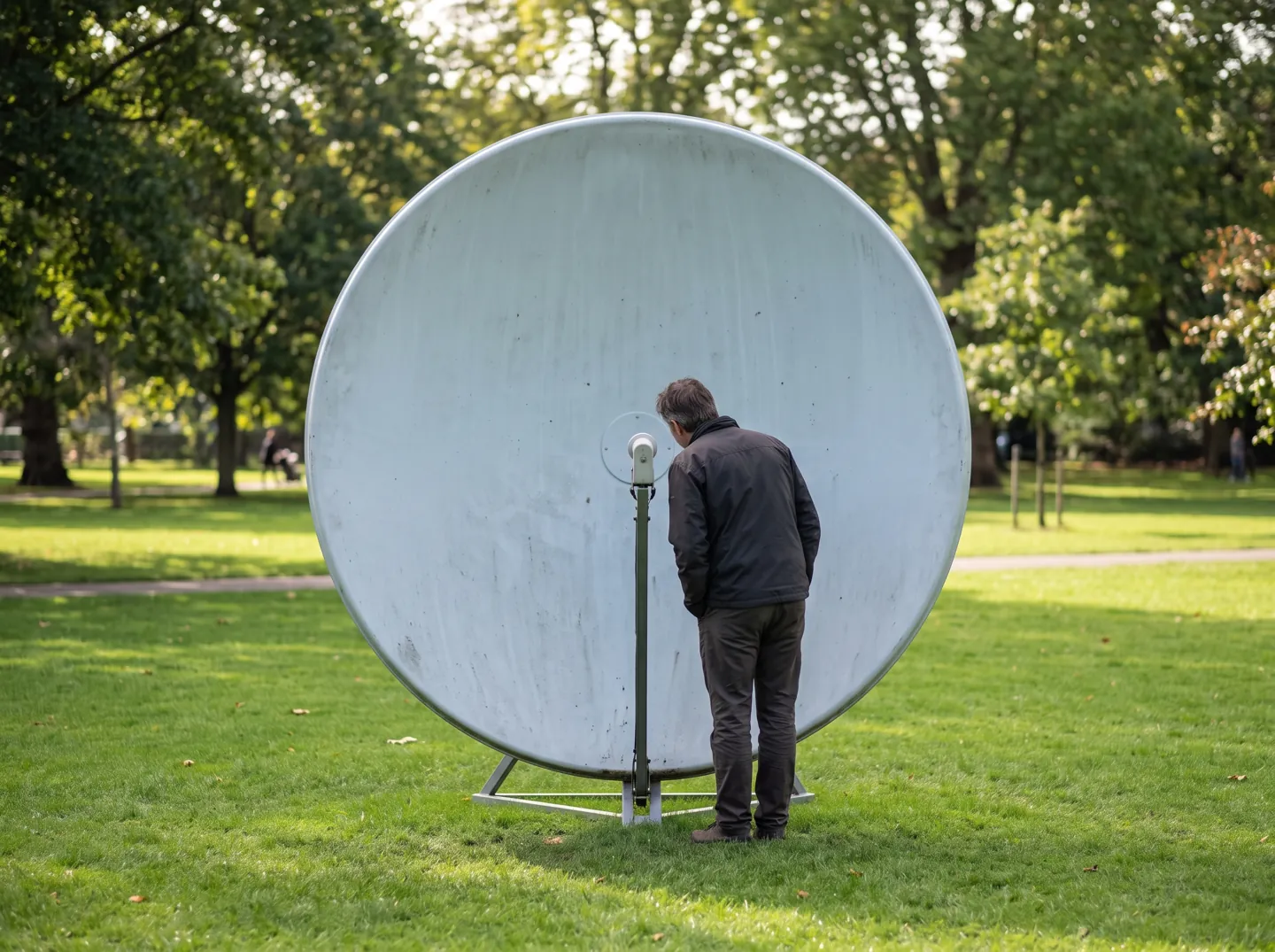
The same idea lives on in science museums: pairs of parabolic dishes that let a whisper at one focus be heard at the other.
Try the idea03THREE MIRRORS, ONE SITE
Denge holds one of each of the three main kinds the experiments tried. Pick one to see how it worked. The bar shows the size of the collecting surface.
Sizes and dates from the Kent Historic Environment Record entry for the Denge mirrors, which quotes the National Heritage List for England.
04TWO NUMBERS WORTH KNOWING
One figure on how far the mirrors could hear,
one on how few sites survive.
8–24 miles
Aircraft sound picked up in favourable conditions
The heritage record says the Denge devices could pick up aircraft sound between 8 and 24 miles away in favourable conditions, but they were always open to interference from other noises and bad weather.
RANGE · HERITAGE RECORD
≈ 11 sites
Sites with acoustic early warning remains
A national survey found only around 11 sites in England where remains of acoustic detection survive, so every surviving example is treated as nationally important.
SURVIVAL · NATIONAL SURVEY
As aircraft got faster, the warning a mirror could give shrank. By 1936 radar had replaced acoustic methods as the main form of early warning, though listening devices stayed in use at anti-aircraft and searchlight batteries.
05SEE IT FOR YOURSELF
You do not need a concrete wall to notice sound being gathered. These are ways to see the idea, and the real mirrors, safely.
Science centres such as We The Curious in Bristol and Jodrell Bank have parabolic whisper dishes that focus sound the same way.
A whisper dish works only at its focal point. Step away from it and the gathered sound fades, just as a mirror's trumpet had to be moved to the loudest spot.
The mirrors are on private land with no public access, but can be seen over the fence on the southern edge of the flooded gravel pits.
Mirrors also survive at Hythe and Abbot's Cliff in Kent, and further north on the Yorkshire and Durham coasts.
06WHY RADAR WON
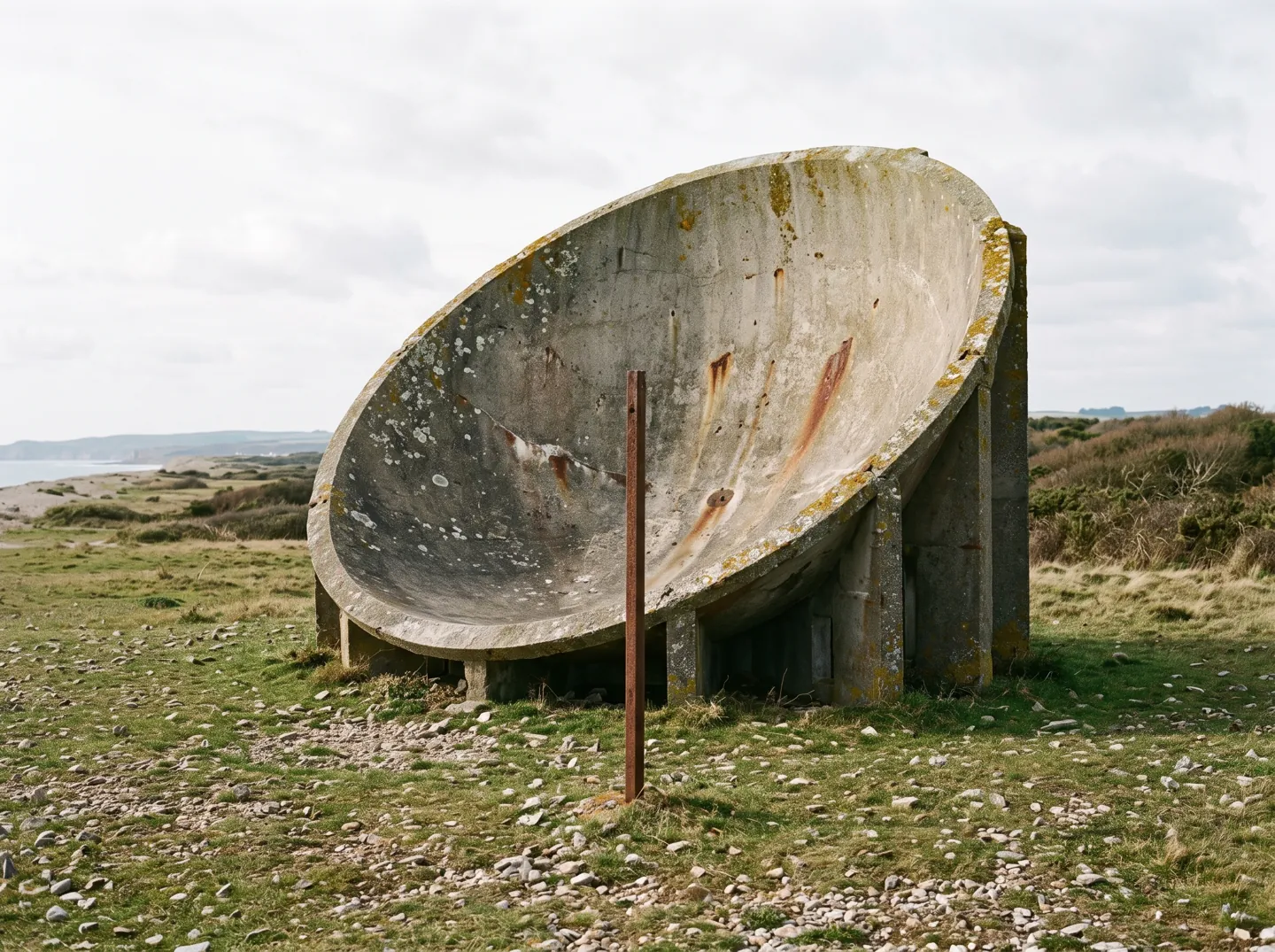
Experiments began during the First World War. The first true sound mirror was a disc cut into a chalk cliff at Binbury Manor in 1915, and the first working reflectors stood on the Kent coast in 1917. After the war a chain was built around Hythe, run from a research station set up by the Air Ministry in 1922.
In February 1935 a test near Daventry showed that radio echoes could detect an aircraft. Within months radio stations were reaching tens of miles, while mirror systems were still limited to about 5 miles under most conditions. Work on mirrors ended, and the Abbot's Cliff mirror was abandoned in 1938.
07Questions
A large concave surface, usually concrete, built to reflect the sound of distant aircraft engines onto a focus, where a listener or a microphone picked it up. Turning the trumpet or picking the best microphone gave the direction.
One mirror gave a direction. Matching that angle with one taken at another coastal mirror let operators work out the aircraft's position and height and track it, then telephone for fighters to take off.
The Kent heritage record gives 8 to 24 miles in favourable conditions. Bad weather and other noises cut that down, and later accounts put typical range nearer 5 miles.
They sit on private, commercial land on an island in a flooded gravel pit, with no public right of access. They can be seen over the fence on the southern boundary. They are a scheduled monument.
They worked, but not well enough. Aircraft became fast enough that a few miles of warning was too little, and radar, tested in 1935, could see much further. By 1936 radar was the main early warning method.
08Sources
ABOUT THIS NAME
soundboardhero.com is part of the DoodleSale portfolio. It isn't in an auction right now, but you can ask about leasing it.